
Tank Water Heater
Tank water heaters are the most common type in US homes. Learn how they work, how long they last, and when to
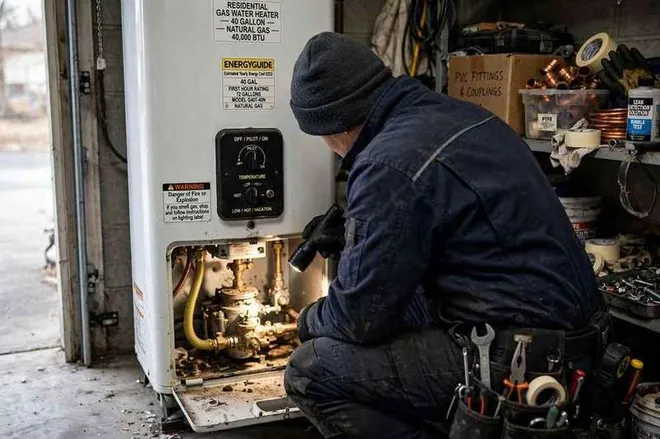
A gas water heater burns natural gas or propane to heat water. It heats fast, recovers quickly after heavy use, and keeps working when the power is out.
A gas burner under the tank heats the water, and a flue carries the exhaust out through the roof. A thermostat controls the burner, and a pilot light or electronic ignition starts it.
Gas heaters recover faster than electric ones, so a family that uses a lot of hot water in a short time often prefers gas.
Gas heaters need good venting, a working carbon monoxide alarm nearby, and a gas valve that shuts off when the pilot goes out.
If you smell gas, leave the house, do not switch anything on or off, and call your gas company or emergency services from outside.
A failed thermocouple, gas valve or pilot assembly on a younger heater is usually worth repairing.
A leaking tank, heavy rust or a heater past its expected life is a replacement job.
Tank water heaters are the most common type in US homes. Learn how they work, how long they last, and when to
Tankless water heaters heat water on demand, with no tank to run out. Learn how they work, the pros and cons,
Electric water heaters are simple, safe and common. Learn how they work, the common faults, and when to repair
Most gas tank heaters last 8 to 12 years, depending on water hardness and maintenance. Tankless gas units typically last longer with regular descaling.
It depends on local gas and electricity prices. Gas usually heats water faster and often costs less per unit of heat, but the only honest answer is to compare your local rates.
Leave the house immediately, do not switch lights or appliances on or off, and call your gas company or emergency services from outside.
Call (480) 919-8156 and describe what your water heater is doing. Elite will connect your request with an available independent local provider — the provider handles diagnosis, pricing, scheduling and the work directly with you.